Invisible Markers: Chemical Detective Work of the Cold War Era
 |
 |
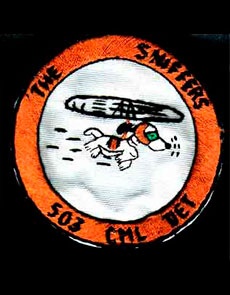 |
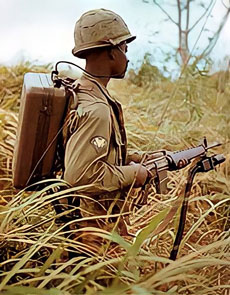
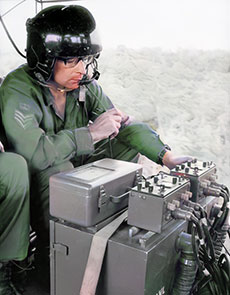
| American personnel detectors from the Vietnam War era: portable XM-2 (left) and airborne XM-3 (center). Right — patch of the 503rd Chemical Detachment "people sniffers" | ||
Scent Detectors: When the Nose is Better Than Radar
Imagine the jungles of Vietnam in the midst of war. Somewhere among the dense vegetation, guerrillas are hiding, but finding them is an almost impossible task. It was then that engineers at General Electric proposed a revolutionary solution: what if we searched for the enemy... by smell?
Thus appeared the People sniffer — a device that determined the presence of people by natural chemical markers of the human body: ammonia from sweat and urine. The first XM-2 model resembled a bulky vacuum cleaner on a soldier's back and had one significant drawback — it often reacted to the operator's own smell! Moreover, the characteristic beeping in the headphones revealed the scout's location to everyone around.
The helicopter version XM-3 proved more successful, but even here the Viet Cong quickly found a countermeasure. When leaving their positions, they would hang buckets of human waste in the trees and watch from a safe distance as American aircraft bombed empty latrines[15]. Nature took revenge on technology.
Pheromone Surveillance: When Cockroaches Become Detectives
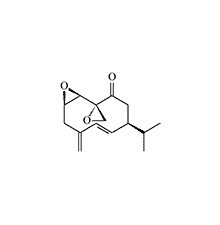
If scent detectors didn't work very reliably, American counterintelligence agents found a much more elegant solution. As an invisible marker, they used Pueriplanone-B — the sex pheromone of the female American cockroach.
The biological activity of this substance is mind-boggling: just one ten-billionth of a gram can drive male cockroaches into a state of sexual arousal. The operation scheme was simple: during a crowd in the subway, a drop of pheromone was secretly applied to the clothing of a suspected agent. Then a cage with male cockroaches was brought into a room he might visit. If the insects began showing characteristic behavior, it meant the "marked" person had indeed been there.
When the scientist who discovered periplanone-B was told about this unusual application of his discovery, he humorously remarked: "If the roaches in your kitchen seem like they're acting a little crazy, you might begin to wonder"[3].
"Spy Dust" and Radioactive Traces
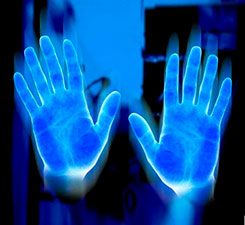
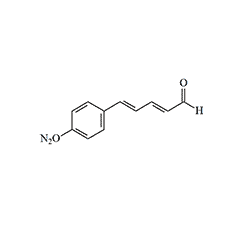
The Cold War era turned chemistry into a tool of invisible surveillance. The KGB developed a special preparation with the code name "METKA" — a chemical compound that was applied to shoes, clothing, and objects in the American embassy. Under ultraviolet light, this substance glowed brightly, allowing them to track every movement of diplomats.
  |
  |
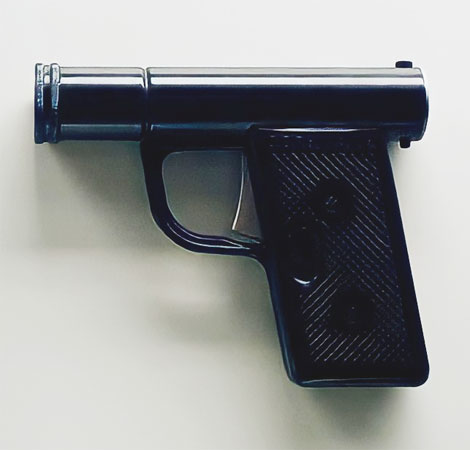 |
| The KGB's "METKA" preparation glowed under ultraviolet light, leaving invisible traces on everything a person touched | American cockroach (Periplaneta americana) and its pheromone periplanone-B — the basis of a biological surveillance system | Special pistol for applying invisible markers (East German development) |
In 1984, the CIA managed to obtain a sample of the mysterious "metka." Chemical analysis showed it was nitrophenylpentadienal (NPPD) — an organic compound with unique fluorescent properties. The substance was dubbed "spy dust" in the American press[1,2].
But the KGB went even further. In the mid-1960s, radioactive cobalt-60 was used for particularly important operations. Anyone who contacted a "marked" object could be detected with an ordinary Geiger counter. According to some reports, Israeli Mossad used a similar technique with radioactive cesium to track terrorists[18].
Future Projects: From Photosensitizers to Quantum Dots
In 1994, the American Wright Laboratory presented an ambitious plan for developing chemical surveillance. One of the most sinister ideas involved secretly introducing photosensitizers — substances that make skin extremely sensitive to sunlight.
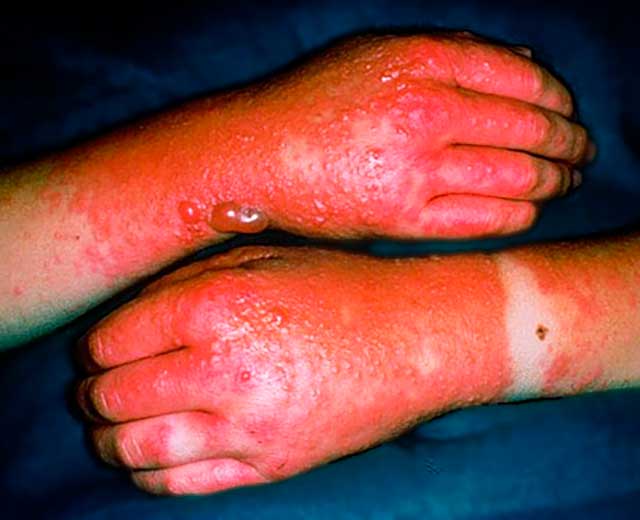
Photodermatitis — the result of increased skin sensitivity to sunlight
The principle is simple and cruel: a preparation that gets into food or is applied to skin shows no effects in darkness. But as soon as a person goes out in the sun, exposed areas of the body are covered with painful burns and blisters within a few hours. Such "vampires" become easily recognizable among the enemy.
Another research direction involved creating substances that cause persistent unpleasant odors. Although the name of the preparation in the Wright Laboratory document is classified, it most likely refers to tellurium dioxide (TeO₂). This compound gives breath, sweat, and urine an unbearable garlic smell that intensifies after alcohol consumption.
Dosage determines the duration of the "aroma": 0.5 mg provides a day and a half of stench, while 13 mg lasts a full eight months! The paradox is that the smell carrier very quickly stops perceiving it, while those around literally suffocate[8].
However, there's also an opposite approach. The fruits of the Indonesian keppel tree (Stelechocarpus burakol) contain substances that give human sweat an exquisite violet aroma. Imagine how strange it would be to discover a guerrilla in the jungle by the scent of French perfume!
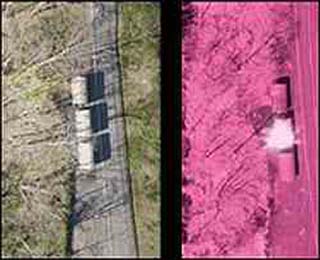
Quantum dots emit light of a strictly defined spectrum when exposed to UV laser
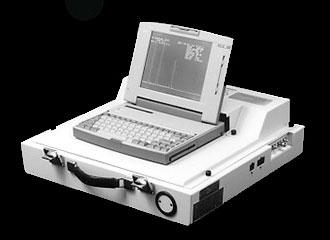
Modern portable chromatograph capable of detecting perfluorocarbon tracer molecules in air
Modern quantum dots, developed by Voxtel Inc., surpass all previous technologies. These nanoparticles the size of a grain of sand are visible at a distance of 2–3 kilometers when illuminated by a UV laser. Their fluorescence is hundreds of times brighter than any organic dyes, allowing covert observation of military equipment, transport, and even individual people[16].
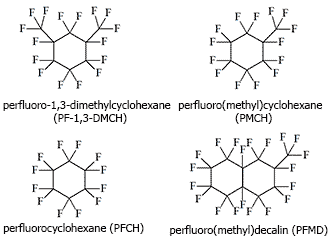
The use of perfluorocarbon tracers (PFT) — volatile compounds without taste or smell — became revolutionary. Thanks to their ability to penetrate through the tiniest cracks, PFT can be detected by a portable gas chromatograph even in a sealed envelope in a closed room.
Originally, PFT were created for tracking drugs, but they quickly found broader application: from marking banknotes to detecting explosives. In 1998, PFT helped solve a kidnapping in Mexico City when all parts of the ransom were discovered in three different criminal hideouts[19,20].
Modern microencapsulated PFT remain active for up to 30 days and can be "programmed" for activation by light or sound of a specific frequency. By 2001, development of remote PFT detection systems at distances of several kilometers was planned[21].
Epilogue: Chemistry in Service of the Invisible Wars
The history of chemical markers is a fascinating chronicle of human ingenuity, where science serves not only progress but also the secret war of intelligence agencies. From primitive "sniffers" in Vietnamese jungles to the most complex quantum markers of our time — each technology reflects the level of development of its era and humanity's unquenchable desire to control the invisible.
In this game of hide-and-seek between spies and counterintelligence agents, chemistry has become a universal language, understandable to instruments but invisible to the human eye. And who knows what unimaginable methods of marking and surveillance the future holds for us?