The CIA's Search for "Knockout Agents"
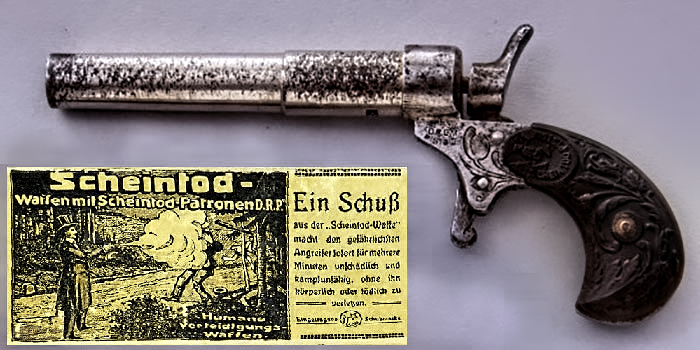
In 1951, the United States Central Intelligence Agency (CIA) initiated systematic investigation of various incapacitating substances, including so-called K-agents (from the word Knockout") — substances that would render an individual or animal helpless and immobile, until definite control measures could be instituted.[1] The CIA, acting through front companies, generously financed universities and chemical corporations to seek out substances that could reduce humans to a state of helplessness.
In 1953, the United States Chemical Corps joined these investigations in the domain of incapacitants. Through collaborative efforts between U.S. military and intelligence agencies, tens of thousands of chemical compounds were tested on animals, volunteers, and unwitting human subjects. Those compounds classified as "knockout agents" belonged to diverse pharmacological categories, and frequently, their mechanisms of action were insufficiently understood or entirely unknown.
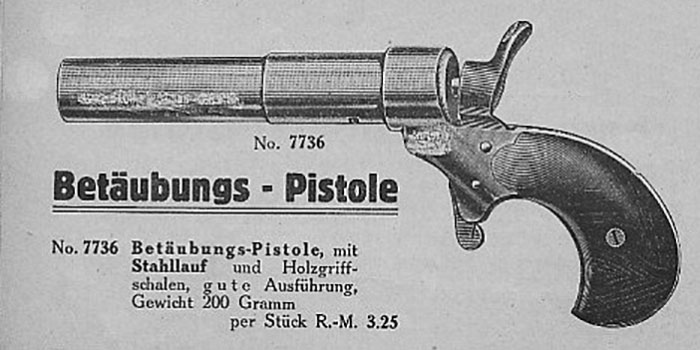
In 1952, a CIA analyst working on Project Artichoke, whose task was to search scientific literature for mentions of various methods of psychological and physical influence on humans, encountered an interesting article in an old weapons catalog. The author, Lucian Cary, wrote:
The CIA was interested in determining the effective range of this weapon, identifying the specific gas utilized, and establishing the duration of the induced unconscious state.[1]
The term "Scheintod" or "Scheintot" (apparent death) was employed by 17th century German physicians to designate a condition resembling death, characterized by the absence of pulse, respiration, and muscular reflexes in an individual.[4]
The "Scheintot" pistol does not refer to a singular stunning device, but rather encompasses a diverse array of self-defense models. The initial specimens of the "Scheintot" pistol emerged in the late 19th century, significantly predating the development of the first chemically irritating warfare agents. These early models probably used tobacco dust and cayenne pepper as active ingredients.. Theoretically, the paralyzing effect could be attributed to the nicotine present in tobacco, which induces severe vertigo and coordination impairment potentially resulting in collapse (as in the video to the left). However, the nicotine concentration in tobacco is insufficient to induce unconsciousness.
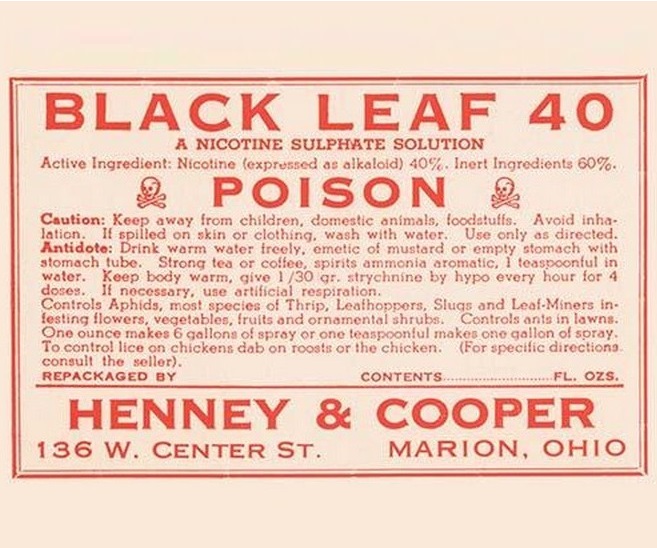
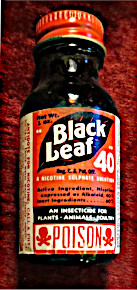
In 1963, the CIA planned to use nicotine to eliminate the communist leader of Cuba — Fidel Castro. A Cuban agent was given a ballpoint pen rigged as a hypodermic syringe, loaded with the poison Black Leaf 40.[40] At the time, this substance was widely used as a pesticide and consisted of a concentrated nicotine solution. However, the agent backed out at the last moment, and the assassination attempt failed. It is rather strange that the CIA, with access to far more effective poisons, chose nicotine — a substance with no well-established lethal dose for humans.[5] Moreover, Fidel Castro was a heavy smoker, and therefore had a tolerance to nicotine’s toxic effects.
|
A Young Woman's Reaction to Smoking Vietnamese Tobacco
|
 |
 |
Left — A young woman's reaction to smoking Vietnamese tobacco with high nicotine content (video when clicking on the image).
Right — Black Leaf-40 insecticide, with 40% nicotine content, which was planned to be used for the assassination of Cuban leader Fidel Castro
Starting in the 1950s, the CIA began contracting with leading universities, chemical companies, and private contractors to gather information about substances with unusual pharmacological effects. For example, one CIA consultant reported that “if monkeys are exposed to heavy and repeated doses of ethylene oxide they lose the function of their spinal chord, but the normal function returns after removal from the gas. Accidental human poisonings have indicated a similar effect from ethylene oxide.”[8]
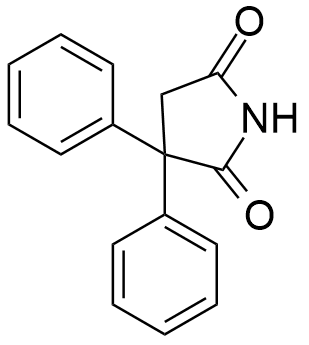
Another MKULTRA document from that time describes the toxic properties of Diphenylsuccinimide: "this compound produces a delayed paralysis. A dose of 50–200 mg/kilo, given as a single dose gives paralysis in nearly 10 days. It is more effective in more highly developed animals. ...more active compounds could be uncovered with further investigation"[9]. Later, it was decided to separate similar research into separate classified programs MKNAOMI (1953–1969), MKPILOT (1954–1973), MKSEARCH (1965–1973), MKCHICKWIT and others.
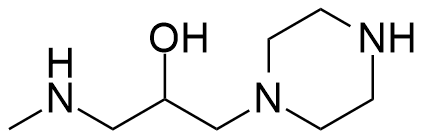
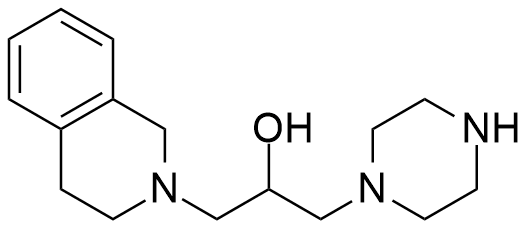
In the 1950s, one of the CIA's major contractors was the Geschickter Fund for Medical Research, which participated in a program synthesizing neurotoxic compounds. One focus of this program was studying the curare-like effect of certain thiols, and the preparation of hydrogenated quinolines and indole alkaloids.[6] In one report prepared for the CIA, successful tests were described of a medication from the hydrogenated quinolines that caused relaxation of voluntary muscles in humans.[7] An important advantage of this new preparation was its muscle-relaxing effects not only when administered intramuscularly but also when taken orally.[6]
 |
  |
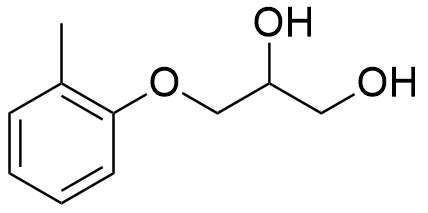 |
| Diphenylsuccinimide | Compounds Geschickter | Mephenesin |
Between 1950 and 1969, the United States Chemical Corps, in collaboration with the CIA, conducted a project under the code name MKNAOMI. The primary objective of this project was to identify novel chemical and biological agents capable of eliminating individuals or temporarily incapacitating them. Among such agents, a neurotoxin derived from ticks of the genus Dermacentor was isolated and investigated for its ability to induce reversible paralysis in humans.[10]
The bite of this tick species causes a condition known as "tick paralysis" in humans after an incubation period of 5–6 days. The intoxication initially manifests as acute weakness in the lower extremities, subsequently progressing to affect the torso, upper limbs, and cranial region. If the arthropod vector is removed during this phase, the paralysis resolves rapidly without residual effects. However, continued neurotoxin exposure may lead to respiratory arrest and mortality.[39]
CIA documentation indicates that the neurotoxin was successfully isolated and transferred for further investigation under "Problem K", a cryptonym designating the development of incapacitating substances intended for covert operations.[10]
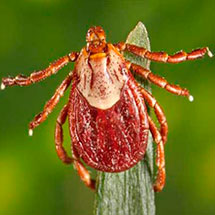
The toxins of ticks, holocyclotoxins and ixovotoxins, cause temporary paralysis[39] |
 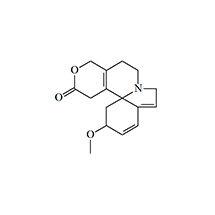 Erythrina, or red bean tree (Erythrina sp.), contains the alkaloid erythroidine. |
 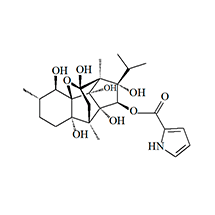 Ryania speciosa contains the toxic diterpenoid ryanodine. |
Erythroidine is a unique paralyzing toxin of plant origin that attracted the attention of CIA specialists in the early '50s. Unlike the better-known arrow poison curare, which only works when directly introduced into the bloodstream, erythroidine can produce paralytic effects even when administered orally.
Presumably, the intelligence agency's interest in this substance was due to its potential use in special operations: erythroidine could theoretically be discreetly added to food or beverages to temporarily immobilize a target. In 1953, the CIA funded a series of experimental studies of erythroidine on dogs; however, the subsequent fate of this project remains unknown.[11]
Interestingly, the Soviet Union used a similar alkaloid called elatin, extracted from Candle larkspur (Delphinium elatum), which had a comparable mechanism of action. Unlike the American developments, this alkaloid found application in medical practice for treating pathological muscle spasms.[12]
Ryanodine. Another paralytic agent from the CIA's clandestine arsenal was ryanodine — a toxin derived from the South American plant Mata-calada (Ryania speciosa), whose name translates from Portuguese as "silent killer." Local people say that this toxin works so fast that a person doesn’t have time to call for help. The potency of this compound is so significant that meat prepared over fires using Mata-calada branches reportedly becomes lethally toxic; furthermore, inhalation of smoke generated by combustion of tree segments can induce fatal outcomes. The indigenous people hunt caimans by rubbing meat bait with its leaves.[15] In one MKULTRA program document, an unidentified source reports that "ryanodine at a dosage 100 micrograms/kg are given orally to a dog it produces muscular spasms of long duration. The spasms begin fairly immediately."[8]
In all likelihood, the search for a new effective paralyzing agent was unsuccessful — by the late 1960s, the Special Operations Division (SOD) had several dozen doses of a drug for treating spasticity — Mephenesin, but given its extremely bitter taste and effective dose measured in grams, it is completely unclear how they planned to use it for operational purposes. Besides mephenesin, the arsenal of US intelligence services at Fort Detrick included an even more toxic alkaloid from curare poison — Toxiferine, and an unidentified paralyzing agent with the code name M-246.[13]